Budget and prices
Buy or rent: what a tool costs per job once you do the division
Price divided by jobs is the only comparison that works. Why a drill costs about $1.00 a use, a rotary hammer $22.00, and where renting wins.
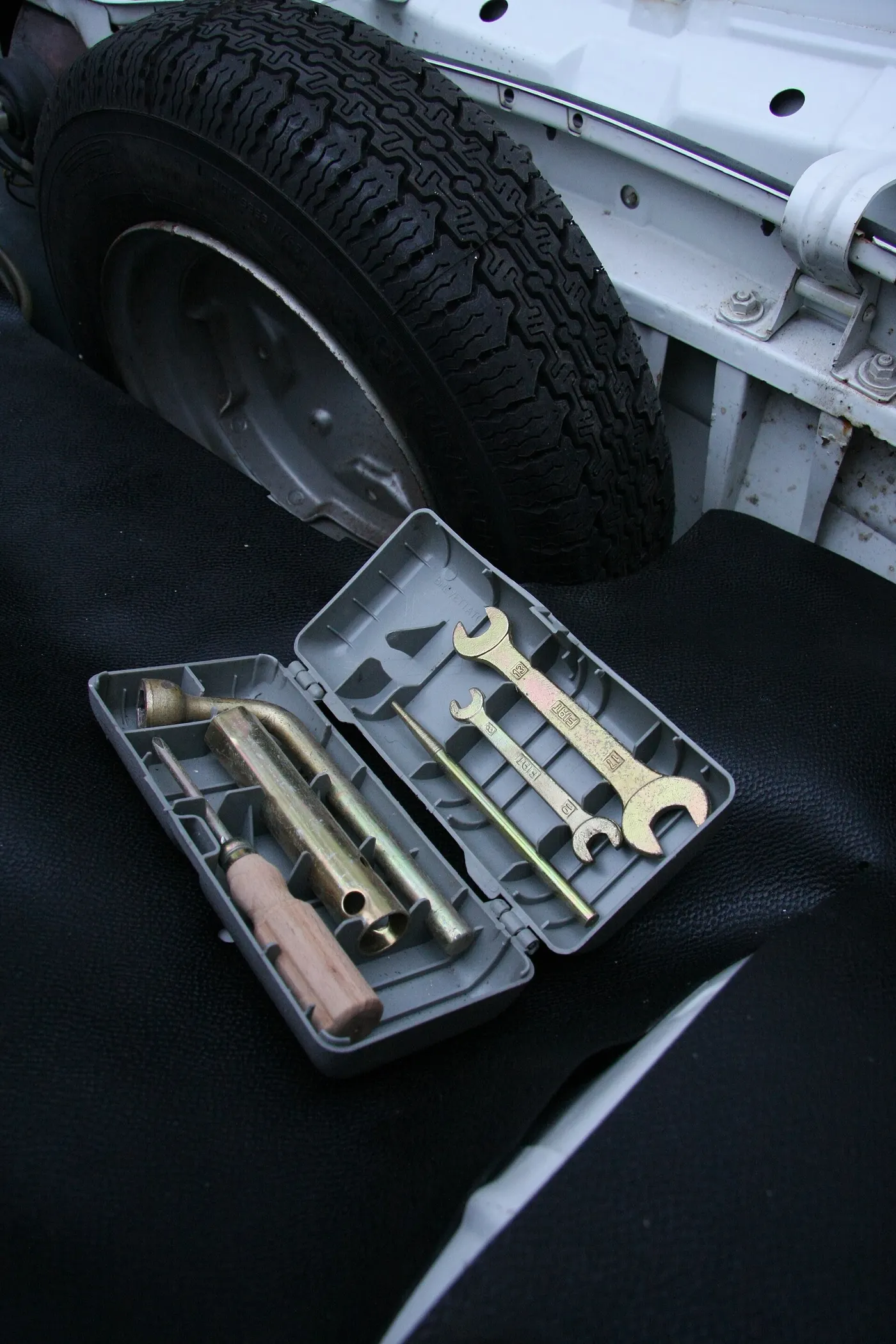
Tools are priced per item and used per job, and the gap between those two units is where tool budgets go wrong. A cheap tool used once is expensive; an expensive tool used weekly is not. The only comparison that survives is price divided by uses.
This guide does that division for the tools a household actually accumulates, then does the buy-versus-rent arithmetic for the ones used rarely. Every price is an example chosen to show the method, and this site quotes no prices and holds no stock.
Price divided by uses, and nothing else
Fix two numbers before any price: how many times a year you will use the tool, and how many years you will keep it. A drill driver used 12 times a year for 10 years does 120 jobs. A circular saw used 4 times a year for the same decade does 40. Those denominators differ by a factor of three, which is more than any price difference between the two tools.
Then divide. A $120 drill across 120 uses is $1.00 a use. A $130 circular saw across 40 uses is $3.25. The saw costs $10 more and is more than three times as expensive to own, and nothing on either box says so.
Be honest about the first number in particular. Most people overestimate how often a specialist tool will come out, and the error is always in the same direction. Halving your estimate and seeing whether the purchase still makes sense is a two-second test that prevents most of the shelf in the garage. The job-cost calculator on this site takes your own figures.
| Tool | Example price | Jobs a year | Uses in 10 years | Cost per use |
|---|---|---|---|---|
| Drill driver kit with battery and charger | $120 | 12 | 120 | $1.00 |
| Impact driver, bare tool | $90 | 8 | 80 | $1.13 |
| Circular saw, bare tool | $130 | 4 | 40 | $3.25 |
| Random orbit sander, bare tool | $80 | 3 | 30 | $2.67 |
| Rotary hammer, bought | $220 | 1 | 10 | $22.00 |
| Rotary hammer, rented | $45 a day | 1 | 10 days | $45.00 |
Each cell is price divided by jobs a year times 10. Consumables are not included; bits, blades and abrasives are costed separately below.
The rent-or-buy line, in days
For a tool used once a year, renting looks obviously right and is not always. A rotary hammer at an example $220 to buy against an example $45 a day to rent breaks even at 4.9 days of hire, which rounds to the 5th day. Below that the rental is cheaper; at and beyond it the purchase is.
The complication is that a day of hire is not a day of work. Collection, deposit, return and the drive add up, and a two-hour job that needs the tool on a Saturday morning can occupy most of a rental day. A household with a flexible weekday is renting one day; a household that can only work on Sundays is often renting two.
Storage sits on the other side. A rotary hammer, its case and its bits occupy a shelf for 364 days a year to be used on 1, and that shelf has a cost in a small garage even though it never appears in any arithmetic. The honest version of the rule is to rent anything used once a year, buy anything used four times a year or more, and do the division for everything between.
- Write down the number of separate occasions you will need the tool over 10 years
- Multiply by the rental day rate, counting travel and collection as part of the day
- Compare that total against the purchase price plus the consumables it needs
- Add a line for storage if the tool is bulky and the space is tight
- Buy when the break-even arrives inside the number of occasions you wrote down
Consumables, which are where the money actually goes
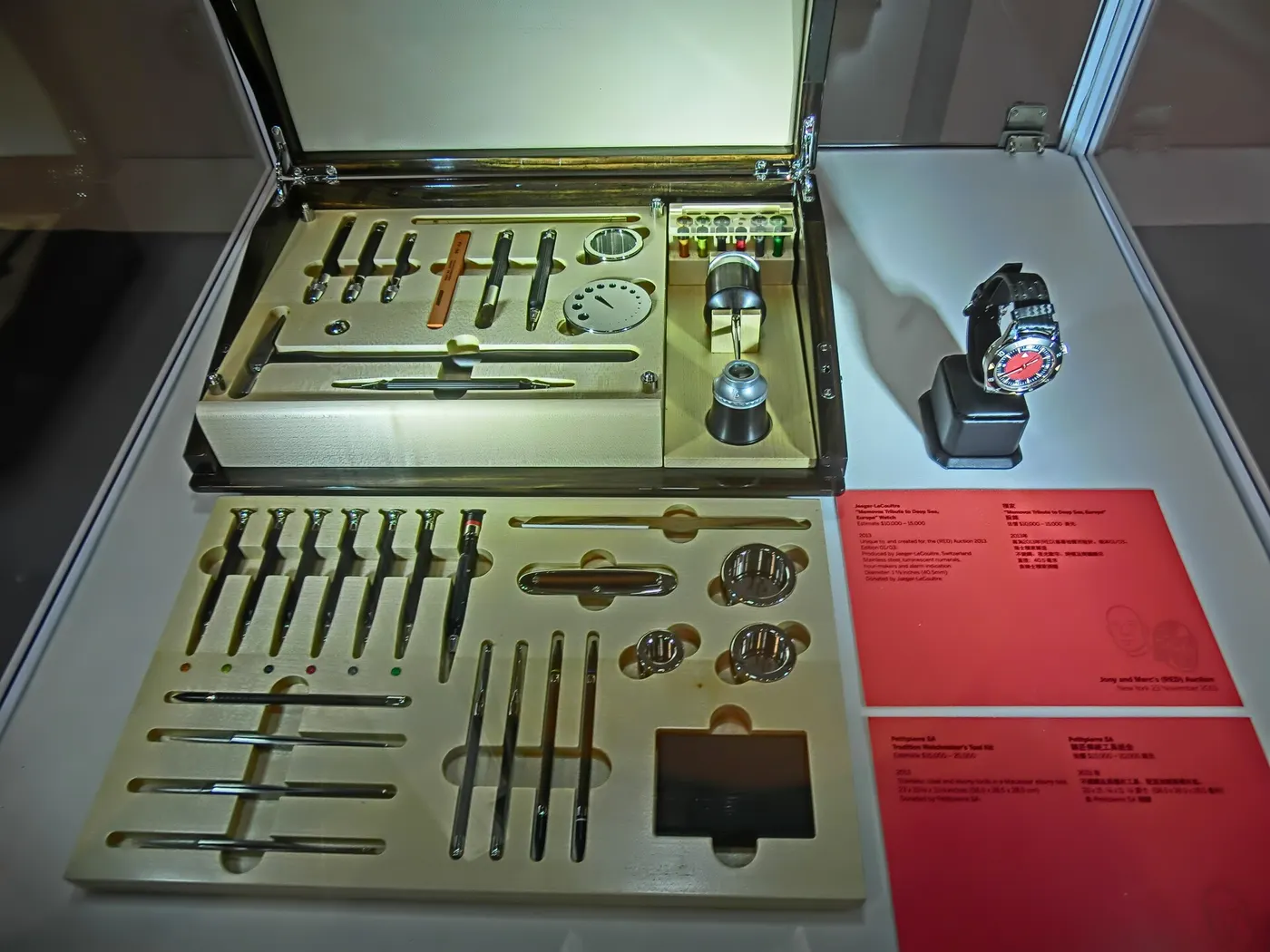
A tool is bought once and fed repeatedly. A set of twist bits at an example $30 wears unevenly, with the 1/8 inch and 3/16 inch sizes going first; replacing those individually at an example $4 each rather than buying a second set is the cheaper route, and it only works if the set's sizes are sold singly.
Saw blades follow the same shape. A circular saw blade at an example $25 that cuts cleanly for 30 sheets and then tears the face grain has cost about $0.83 a sheet, and a blade run past that point costs more in wasted material than the replacement would have. Sandpaper is the clearest case of all: abrasive run smooth does no work at all and simply burnishes the surface.
Across 10 years, consumables commonly exceed the tool. The $120 drill above is $1.00 a use; a replacement bit or two a year at $4 each adds roughly $0.33 to $0.67 a use on top. Any budget that counts the tool and not the feed is understating the figure by a third or more.
| Consumable | Example price | What it covers | Cost per unit of work |
|---|---|---|---|
| Twist bit set | $30 | Most sizes unused, two sizes worn out | Replace singles at about $4 each |
| Circular saw blade | $25 | About 30 clean sheet cuts | about $0.83 a sheet |
| Sanding discs, pack of 10 | $12 | About 1 piece of furniture | about $12 a project |
| Driver bits, pack of 5 | $9 | Roughly 200 screws before rounding | about $0.05 a screw |
These are illustrative divisions rather than measurements, intended to show that the feed line is of the same order as the tool line over a decade.
The protective kit is part of the job cost
Eye and hearing protection are not optional extras that sit outside the budget; they are per-job costs like blades. The federal eye and face protection standard, 29 CFR 1910.133, requires eye protection with side protection where there is a hazard from flying objects, and recognises equipment meeting ANSI/ISEA Z87.1-2010, ANSI Z87.1-2003 or ANSI Z87.1-1989 (R-1998). Those obligations fall on employers rather than on homeowners, and the specification is the same either way.
Hearing protection is governed by duration as well as level. OSHA's Table G-16 permits 90 dBA for 8 hours, 95 dBA for 4 hours, 100 dBA for 2 hours and 105 dBA for 1 hour, and a hearing conservation program is required where exposure reaches an 8-hour time-weighted average of 85 decibels. The National Institute for Occupational Safety and Health sets its recommended exposure limit at 85 dBA averaged over an eight-hour workday.
The practical consequence for a budget is small and fixed. A pair of Z87.1 glasses and a set of ear defenders are a one-off purchase that covers every job in this guide, which across 120 drill uses is cents per use and is the only line here that cannot be recovered after the fact.
Borrowing, sharing and the cost of the second-best tool
A borrowed tool has a cost per use of zero and a different risk: the job runs on someone else's schedule, and a damaged tool is replaced at full price rather than at your share of it. For a once-a-decade job that trade is usually worth making.
The worse economy is buying the cheapest version of a tool used often. A $35 drill that fails after 20 uses is $1.75 a use, which is more than the $120 drill at $1.00, and it fails in the middle of a job rather than at a convenient moment. Cheapness and low cost per use are different properties, and only one of them is visible on the shelf.
The reverse error is real too. A $300 drill used 12 times a year for 10 years is $2.50 a use, which is two and a half times the $120 tool for work that neither tool struggles with. The spread between tools is narrow in the middle of the range and wide at both ends.
Before you buy
- Write down jobs a year and years kept before looking at any price
- Divide price by total uses and compare tools on that figure, not on the tag
- Halve your jobs-a-year estimate and check the decision still holds
- Count a rental day as a whole day, including collection and return
- Add consumables to the arithmetic: bits, blades and abrasives all have their own denominators
- Check whether individual bit sizes and blade types are sold separately
- Include one pair of ANSI Z87.1 eye protection and one set of ear defenders in the first purchase
Questions readers ask
- At what point does buying beat renting?
- On the example figures here, at the 5th day of hire: a $220 rotary hammer against a $45 day rate breaks even at 4.9 days. Count a day of hire as a whole day including collection and return, because a two-hour job rarely uses less than that.
- Why is the cheapest tool often the most expensive?
- Because the denominator collapses. A $35 drill that fails after 20 uses is $1.75 a use, against $1.00 for a $120 drill lasting 120 uses. The purchase price is lower and the cost of ownership is higher, and the failure arrives mid-job rather than at a chosen moment.
- Should consumables really be in the budget?
- Over a decade they are of the same order as the tool. Replacing two worn bit sizes a year at about $4 each adds roughly $0.33 to $0.67 to a drill that costs $1.00 a use. A blade run past its clean life costs more in ruined material than a replacement blade does.
- How do I estimate jobs a year honestly?
- Count the jobs you did in the last 2 years rather than the ones you intend to do in the next 2. Then halve the figure and see whether the purchase still makes sense. The estimate error on specialist tools is consistently in the optimistic direction, which is why the garage shelf fills.
- Does protective equipment belong in cost per job?
- Yes, and it is the cheapest line in the guide. One pair of eye protection marked to ANSI Z87.1 with side protection and one set of ear defenders cover every job here, which across 120 drill uses works out at cents per use. It is also the only line that cannot be bought retrospectively.
Sources
- OSHA 29 CFR 1910.133 — eye and face protection, side protection and recognised ANSI Z87.1 editions — checked 2026-11-03
- OSHA 29 CFR 1910.95 — occupational noise exposure, Table G-16 permissible durations and the 85 decibel action level — checked 2026-11-03
- NIOSH — noise and hearing loss prevention, recommended exposure limit of 85 dBA over an eight-hour workday — checked 2026-11-03
Some links on this site can earn us a commission. That does not change which product a guide recommends, and it adds nothing to your price. Advertising is not enabled on this site yet. When it is, ads will be labelled and kept visually separate from the guides.