How to choose
Choosing a cordless drill: the four decisions that outlast the tool
Chuck size, clutch, battery platform and whether you need an impact driver instead. The four drill decisions that still matter in year ten.
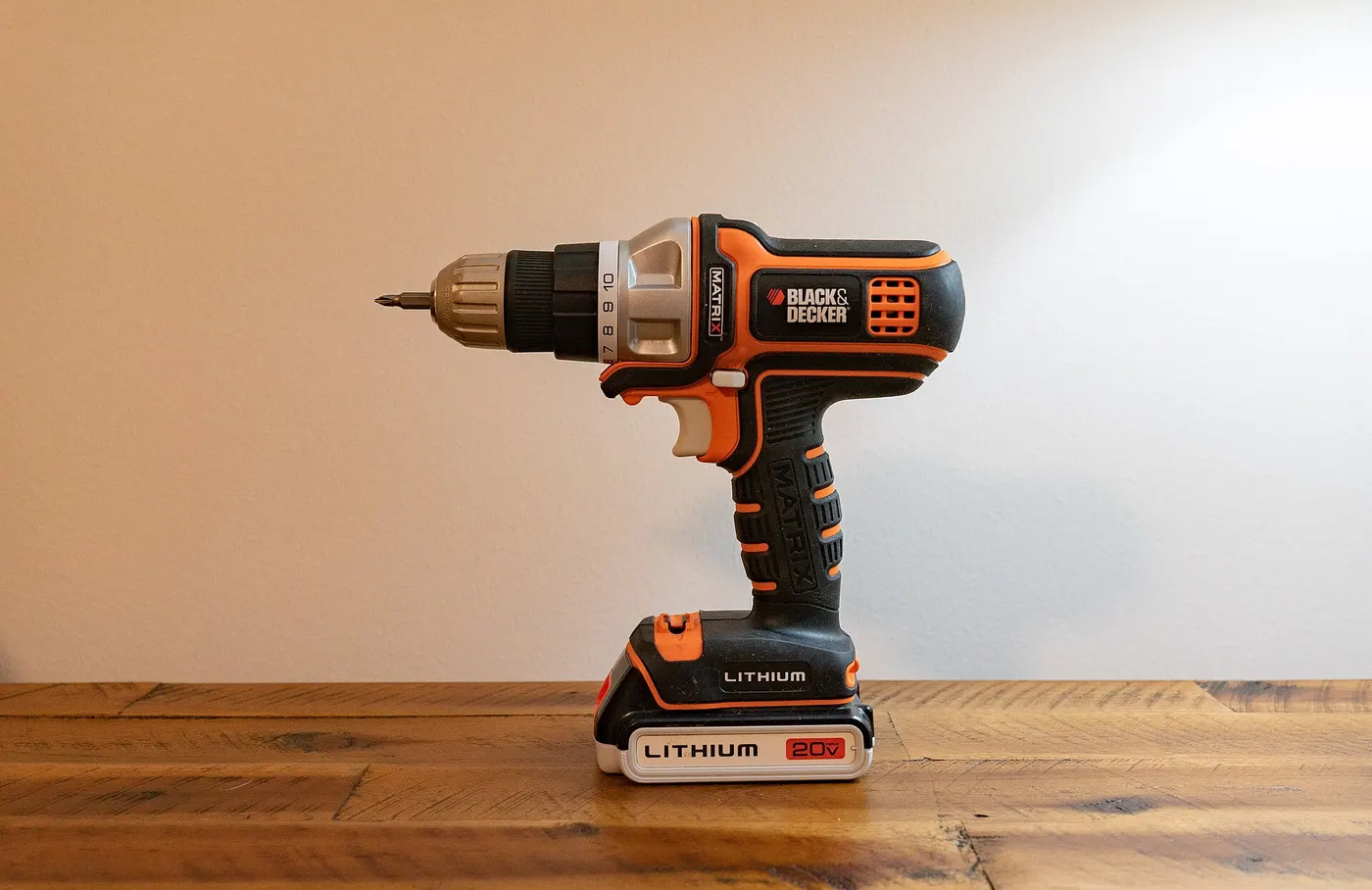
A cordless drill is bought once and lived with for a decade. The body usually outlasts the first battery, so the decision that matters most is not which drill but which battery system you are joining, because every later tool either fits it or starts a second pile of chargers.
This guide takes four decisions in the order they bind you: platform, chuck, clutch and whether the job in your head actually wants a drill at all. Prices are examples used to show arithmetic, and no tool here has been tested by us or supplied to us.
The platform decision comes before the tool
Battery packs are not interchangeable between makers, and the pack and charger are most of the price of a first purchase. That means the first tool you buy quietly sets the price of every tool after it. A kit with a drill, a battery and a charger at an example $160 and a bare tool at an example $90 differ by $70, and that $70 is the saving available on every subsequent tool once the batteries exist.
Three later bare tools at that difference is about $210 saved, which is more than the price of the first drill. The reverse case is the one to avoid: two half-filled platforms, two chargers and four batteries that fit nothing else, where every purchase pays the pack cost again.
Voltage labelling confuses this more than it should. A pack sold as 20V max and a pack sold as 18V are usually the same chemistry described differently, one by peak no-load voltage and one by nominal voltage under load. The number that actually changes runtime is the amp-hour rating: a 4.0 Ah pack runs about twice as long as a 2.0 Ah pack of the same voltage, and weighs roughly twice as much on the end of the handle.
| Purchase | Example price | What you get |
|---|---|---|
| First tool as a kit | $160 | Drill, one or two batteries, a charger |
| Same tool as a bare unit | $90 | The tool only, needing a pack you already own |
| Difference per later tool | $70 | The saving available on every bare tool after the first kit |
| Three later bare tools | $210 saved | More than the price of the first drill |
| A second platform started by accident | $70 lost per tool | Two chargers and packs that fit nothing else |
The figures are examples. The ratio is what matters: the pack and charger are most of a first purchase, and nothing of a later one.
Chuck size and clutch: the two numbers on the tool
Chuck capacity is a hard limit rather than a preference. A 3/8 inch chuck takes most twist bits and screwdriver bits and will not accept the shank of a 1 inch spade bit or a large hole saw arbor. A 1/2 inch chuck takes both, at the cost of a longer, heavier head. If any part of your list involves framing lumber or hole saws, that decision is already made.
The clutch is the numbered collar behind the chuck, and it is the feature that separates a drill driver from a drill. Set low, it slips before the screw head strips or the plasterboard tears; set to the drill symbol it is bypassed entirely. Most over-driven screws and most stripped anchors in a home come from a tool used with the clutch in the drill position.
Brushless motors matter less at home than the marketing suggests and more than nothing. They run cooler and draw less current for the same work, which chiefly shows up as longer runtime per charge and a longer motor life under sustained load. For 12 jobs a year across 10 years, the difference is modest; for daily use it is not.
- 3/8 inch chuck: lighter and shorter, takes twist bits and driver bits, refuses large spade and hole saw shanks
- 1/2 inch chuck: takes everything, adds length and weight at the head
- Clutch collar set low for screws, set to the drill symbol only when boring
- Two speed ranges: low range for torque and driving, high range for small bits in wood
- A side handle is the difference between a stalled hole saw twisting the tool and twisting your wrist
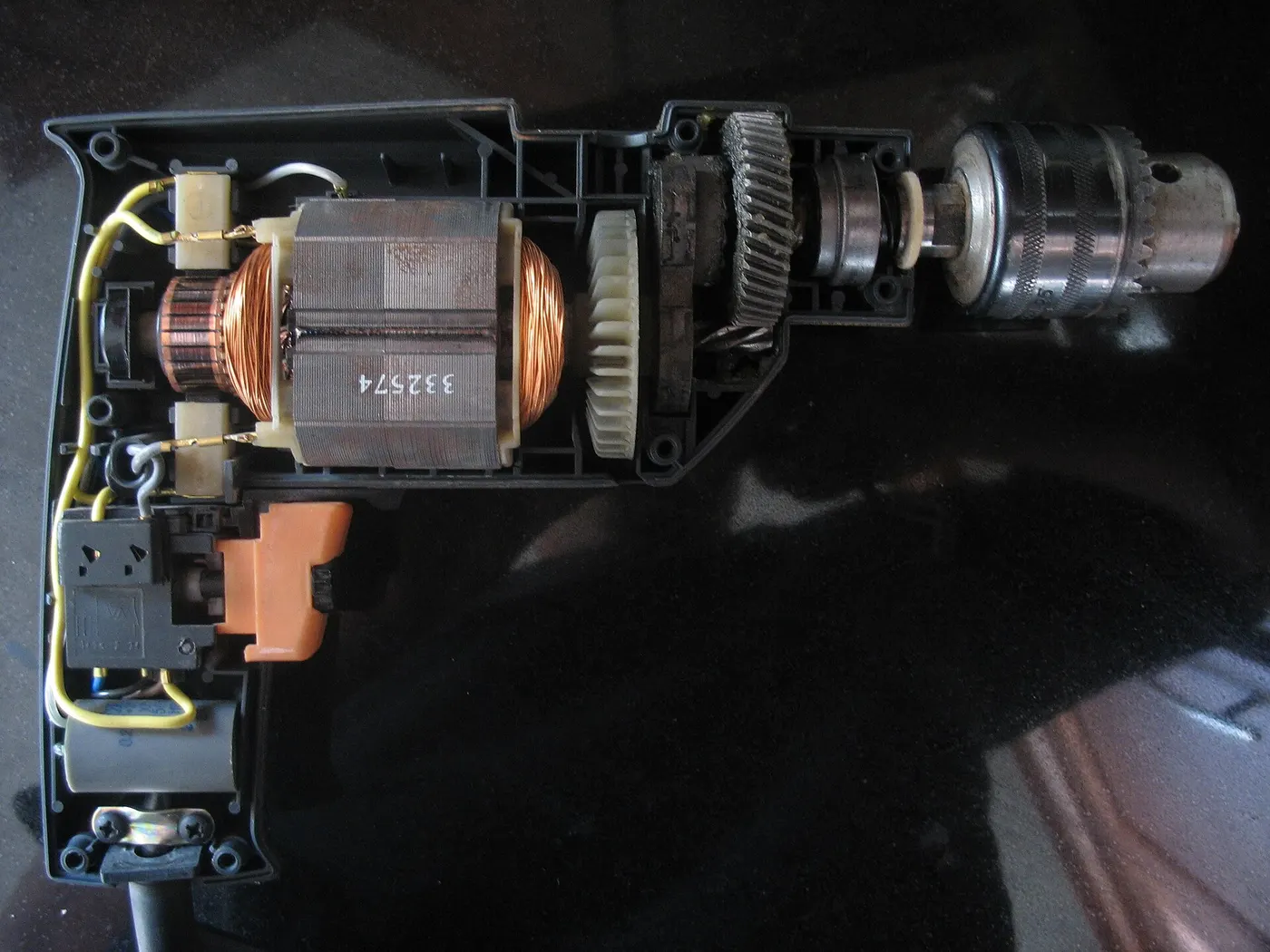
Drill, impact driver or neither
An impact driver is not a stronger drill. It delivers rotational hammer blows rather than steady torque, which drives long screws without the reaction force ending up in your wrist, and which makes it poor at anything needing control, such as a hole in tile or a screw into a brass hinge.
A hammer drill adds a forward percussion action for masonry anchors. It is not the same tool as a rotary hammer, which uses a piston and an SDS shank and is the tool for concrete rather than brick. Buying a hammer drill for a concrete floor is the single most common mismatch in this category.
The honest answer for many households is that one drill driver covers the list. Flat-pack furniture, picture hooks, curtain rails, shelf brackets into studs and the occasional door hinge are all clutch work with small bits. The second tool only earns its place when the list includes repeated long screws, which is where the impact driver arrives.
| Job | Tool that suits it | Why |
|---|---|---|
| Flat-pack furniture, picture hooks, shelf brackets | Drill driver with a clutch | Clutch slips before the fixing strips |
| Repeated 3 inch deck or fence screws | Impact driver | Impacts deliver torque without wrist reaction |
| 1 inch holes through framing lumber | Drill driver with a 1/2 inch chuck and a side handle | Spade bit shanks need the capacity and the handle |
| Anchors into brick or block | Hammer drill | Percussion breaks the material, torque alone does not |
| Anchors into poured concrete | Rotary hammer with an SDS shank | Piston action rather than a vibrating clutch |
| Mixing compound, hole saws over 2 inch | Corded drill or high-torque unit with side handle | Sustained load and real kickback risk |
Bits wear faster than tools, and unevenly
A drill is a motor and a chuck; the cutting is done by a consumable. A set of twist bits at an example $30 looks like a single purchase and behaves like several, because two or three sizes do most of the work and wear out while the rest of the case stays unused. The 1/8 inch and 3/16 inch are usually the first to go.
Replacing individual sizes at an example $4 each rather than buying a second set is the cheaper route, and it is only possible if you buy a set whose sizes are sold singly. That is a question to ask of the packaging before the set goes in the basket.
Driver bits are the same story at a smaller scale. A worn Phillips bit is what rounds out a screw head, and the failure is gradual enough that most people blame the screw. A bit holder with a magnetic sleeve and a few spare number 2 bits costs little and removes most stripped fixings.
Buy the protective kit in the same order
Eye protection belongs in the first purchase rather than the third. The federal workplace standard for eye and face protection, 29 CFR 1910.133, requires eye protection providing side protection where there is a hazard from flying objects, and it recognises equipment meeting ANSI/ISEA Z87.1-2010, ANSI Z87.1-2003 or ANSI Z87.1-1989 (R-1998). Those rules bind employers rather than homeowners, and they are the published specification a pair of glasses either meets or does not.
The standard also addresses prescription lenses: where corrective lenses are worn, the eye protection either incorporates the prescription in its design or is designed to be worn over the prescription lenses without disturbing their position. That is the clause that rules out perching safety glasses on top of spectacles.
Hearing comes next, and the numbers are in the safety guide on this site. Both items together cost less than the difference between a kit and a bare tool, which is a useful way to think about the first purchase.
Before you buy
- Decide the battery platform before the drill, because it prices every later tool
- Compare amp-hours rather than voltage labels when judging runtime
- Pick the chuck size from the largest bit on your actual job list
- Check the clutch has enough settings to be useful, and learn to leave it off the drill symbol
- Ask whether individual bit sizes are sold separately before buying a set
- Confirm a side handle is supplied if hole saws or spade bits are on the list
- Buy eye protection marked to ANSI Z87.1 with side protection in the same order as the tool
Questions readers ask
- Is 20V actually more powerful than 18V?
- Usually not. One figure is the peak voltage of the pack at no load and the other is the nominal voltage under load, and they commonly describe the same cells. The specification that changes what you notice is the amp-hour rating: a 4.0 Ah pack runs roughly twice as long as a 2.0 Ah pack and weighs roughly twice as much.
- Do I need an impact driver as well as a drill?
- Only if your list includes repeated long screws. An impact driver drives 3 inch screws without the reaction force reaching your wrist, and it is poor at controlled work such as drilling tile or seating a brass screw. For furniture, hooks and brackets, a drill driver with a working clutch covers the list.
- Is a brushless motor worth paying for at home?
- At 12 jobs a year the difference is modest: longer runtime per charge and less heat under sustained load. It becomes decisive for daily use or for long sessions with hole saws and mixers, where a brushed motor runs hot. Chuck size and clutch quality change more about how the tool behaves on a normal job.
- Can a hammer drill handle concrete?
- Brick and block, generally yes; poured concrete, slowly and with heavy bit wear. Concrete is the rotary hammer's job, because a piston mechanism delivers far more energy per blow than a vibrating clutch does. For one concrete job a year, the budget guide on this site shows renting is the cheaper route.
- How much does joining the wrong platform cost?
- About $70 per later tool on the example figures here, because each one has to be bought as a kit with its own pack and charger instead of as a bare unit. Across three tools that is about $210, plus two chargers taking up bench space and batteries that fit nothing else you own.
Sources
Some links on this site can earn us a commission. That does not change which product a guide recommends, and it adds nothing to your price. Advertising is not enabled on this site yet. When it is, ads will be labelled and kept visually separate from the guides.